
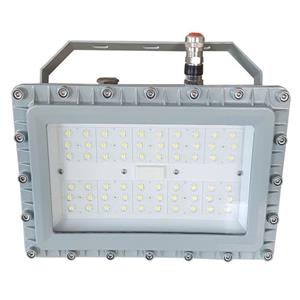
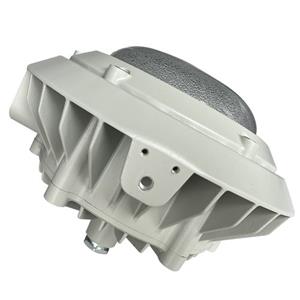
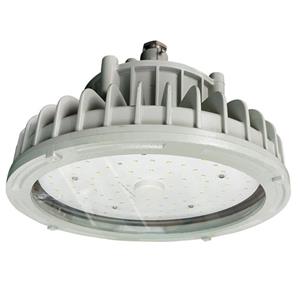
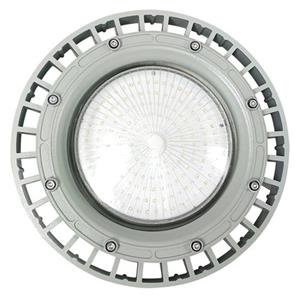
Explosion Proof Lighting: Technological Evolution and Industrial Applications in Hazardous Environments
Integrating LED Innovation with Safety Standards for Optimal Hazard Mitigation
I. Fundamental Concepts and Certification Standards
Definition & Operational Principle
Explosion proof lights are engineered to contain internal explosions without igniting surrounding
flammable atmospheres (e.g., gases, dust). Unlike standard lighting, they feature reinforced housings
(e.g., die-cast aluminum, stainless steel) that withstand pressures up to 1.5 MPa and prevent flame
propagation. Key design elements include:
Sealed Enclosures: IP66/IP65 ratings for dust/water resistance .
Temperature Control: T1-T6 classifications limiting surface temperature below 85°C in gas groups IIC/IIB .
Global Certification Frameworks
Compliance with safety protocols is mandatory:
ATEX/IECEx: Mandatory in EU for Zone 0/1/2 (gas) and Zone 21/22 (dust).
UL 844/NEC: Class I Division 1/2 standards for North America .
CCC/CE: China and EU market access certifications .
II. LED Technology: Revolutionizing Explosion Proof Lighting
Performance Advantages over Traditional Systems
LED explosion proof lights deliver 50-70% energy savings and 50,000+ hour lifespans, outperforming
fluorescent/halogen alternatives . Critical metrics include:
Luminous Efficacy: Up to 140 LM/W (e.g., NIBBE’s EPL66 series).
Spectral Control: 6000K daylight spectrum enhancing visibility in low-contrast environments .
Thermal Management Innovations
High-power LEDs (100W–400W) utilize:
Active Cooling: Aluminum fins + thermal pads reducing junction temperature.
Material Science: Copper substrates and PC/PMMA lenses resisting chemical corrosion .
III. Material Engineering and Structural Design
Housing and Component Selection
Metallurgy: Stainless steel (marine applications) vs. aluminum alloy (weight-sensitive sites).
Optical Systems: Tempered glass lenses with anti-glare coatings maintaining 92% light transmission .
Electrical Safety Mechanisms
Wide Voltage Input: 90–305V AC/DC compatibility for grid instability .
Explosion-Proof Conduits: Sealed cable glands preventing arc formation .
IV. Industrial Deployment: Sector-Specific Solutions
Oil & Gas/Chemical Plants
Refinery Lighting: Zone 1-rated 200W LED floodlights (e.g., KHJ Tank series) for leak detection.
Petrochemical Tanks: Linear LED fixtures with Ex d IIC T6 protection .
Mining and Tunnel Infrastructure
Coal Mines: IP68-rated portable lamps with 180dB emergency alarms .
Subways: 100W–300W high-bay lights with vibration resistance .
Marine and Ports
Ship Decks: Brass-housed 12W–80W fixtures (CFD4 series) surviving salt spray .
Offshore Rigs: Corrosion-proof 480W floodlights for drilling platforms .
V. Emerging Trends and Data-Driven Optimization
Smart Integration and IoT
Predictive Maintenance: Sensors monitoring lumen depreciation and thermal drift .
Adaptive Lighting: Dimming controls via gas concentration sensors .
Sustainability Metrics
Carbon Reduction: 500W LED replacing 1000W metal halide cuts 4.2 tons CO₂/year .
Recyclability: Aluminum/PC material recovery rates exceeding 95% .