
2026 H2 Global Explosion Proof Light Industry Forecast: LED Light Technology Drives Sustained Market Expansion and Industrial Safety Upgrade
23-05-2026
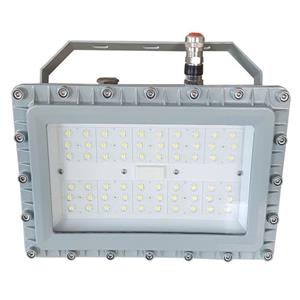
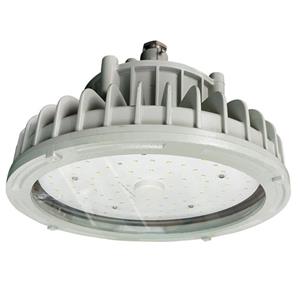
Global Industrial News, May 23, 2026 — The global explosion proof light industry is poised for robust and structured growth throughout the second half of 2026, as industrial safety regulations tighten worldwide, energy-saving LED light technology matures rapidly, and downstream hazardous industry demand continues to surge. As a core safety lighting product for flammable, explosive, and high-risk industrial scenarios, explosion proof light has become an indispensable infrastructure component in oil and gas, chemical processing, mining, marine offshore, power generation, and pharmaceutical industries. Latest industry forecast data indicates that the global explosion proof light market will maintain a year-on-year growth rate of over 8.5% in H2 2026, with LED explosion proof light occupying more than 92% of the overall light product share in the high-risk industrial lighting segment, continuing to reshape the competitive landscape and technical standards of the entire light manufacturing industry.
In recent years, the iteration and popularization of LED light technology have completely overturned the traditional explosion proof light market dominated by traditional halogen and fluorescent light products. Compared with conventional industrial light fixtures, LED explosion proof light features ultra-low energy consumption, long service life, high luminous efficiency, excellent explosion-proof performance, and strong environmental adaptability, perfectly matching the stringent safety and energy-saving requirements of modern hazardous industrial sites. In the second half of 2026, the global explosion proof light industry will usher in dual-driven growth from policy supervision and market demand, while technological upgrading will further eliminate backward low-efficiency light products, accelerating the high-quality development of the entire explosion proof light industrial chain.
1. Overall Market Performance and H2 2026 Scale Forecast of Explosion Proof Light Industry
The global explosion proof light market has maintained steady growth in the first half of 2026, with market size reaching approximately USD 410 million, a year-on-year increase of 7.9%. Benefiting from large-scale industrial safety renovation projects in emerging economies and the replacement wave of traditional light fixtures in developed industrial regions, the market scale of explosion proof light will achieve a more prominent growth breakthrough in H2 2026. Industry research institutions predict that the global explosion proof light market size will exceed USD 480 million in the second half of 2026, driving the full-year 2026 market volume to break USD 890 million, with a compound annual growth rate of 8.5% from 2026 to 2032, far higher than the average growth level of the general industrial light market.
From the product structure perspective, LED explosion proof light has established absolute market dominance in the explosion proof light industry. In H1 2026, the shipment volume of LED explosion proof light accounted for 91.3% of all explosion proof light products, and this proportion will rise to 93.5% in H2 2026. Traditional explosion proof light products such as incandescent and fluorescent explosion proof light are gradually phased out of mainstream application scenarios due to high energy consumption, short service life, poor stability, and low safety coefficients. It is worth noting that intelligent LED explosion proof light products with functions such as remote dimming, real-time monitoring, and fault alarm will achieve explosive growth in H2 2026, becoming the core growth engine of the entire explosion proof light market.
In terms of regional market segmentation, North America and Europe will continue to maintain stable demand for high-end explosion proof light in H2 2026, driven by strict OSHA and ATEX industrial safety standards, with market demand focusing on high-precision, intelligent, and ultra-high safety level LED explosion proof light. The Asia-Pacific region will become the fastest-growing market for explosion proof light in H2 2026, benefiting from accelerated industrialization in China, India, Southeast Asia and other regions, continuous expansion of chemical, coal, and petrochemical industries, and increased government investment in industrial safety rectification. The Middle East and Africa region will also witness rapid growth in explosion proof light demand, as local oil and gas field development projects continue to advance, generating rigid demand for professional explosion proof light fixtures.
2. Core Driving Factors for H2 2026 Explosion Proof Light Industry Growth
2.1 Tightening Global Industrial Safety Supervision Policies Boost Explosion Proof Light Demand
Stringent industrial safety regulations are the fundamental driving force for the sustained growth of the explosion proof light market. In the second half of 2026, countries around the world will further upgrade safety management standards for hazardous industrial sites, clearly requiring all flammable and explosive production workshops, storage warehouses, and operation platforms to be equipped with certified explosion proof light products. The European Union’s updated ATEX 2026 safety directive has raised higher requirements for the explosion-proof grade, sealing performance, and anti-corrosion capability of industrial light fixtures, forcing downstream enterprises to eliminate unqualified traditional light products and replace them with compliant LED explosion proof light.
In North America, the OSHA industrial safety inspection mechanism has been fully implemented in H2 2026, imposing heavy penalties on enterprises that use non-standard explosion proof light in high-risk scenarios, which directly stimulates the replacement demand for high-quality explosion proof light. In the Asia-Pacific region, China’s new industrial safety production regulations and India’s hazardous workplace lighting safety standards have been officially implemented in mid-2026, covering mandatory installation and regular inspection requirements for explosion proof light in chemical, mining, and energy industries. The continuous upgrading of global safety policies ensures rigid and sustainable market demand for explosion proof light, and LED light, as the most compliant and reliable light source, has become the first choice for industrial safety renovation.
2.2 LED Light Technological Iteration Optimizes Explosion Proof Light Product Performance
Technological innovation of LED light is the core factor supporting the iterative upgrade of the explosion proof light industry. In recent years, continuous breakthroughs in LED chip technology, heat dissipation technology, and drive circuit technology have comprehensively improved the comprehensive performance of LED explosion proof light. Compared with traditional explosion proof light, modern LED explosion proof light has a luminous efficiency of up to 120-150lm/W, which is more than 60% higher than that of traditional light sources, while the energy consumption is reduced by more than 70%. The service life of LED explosion proof light can reach 50,000-80,000 hours, 5-8 times that of traditional explosion proof light, greatly reducing the maintenance and replacement cost of industrial light fixtures for enterprises.
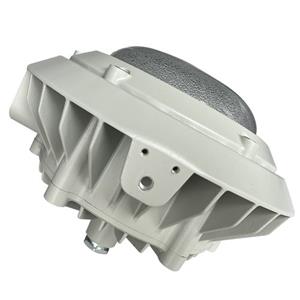
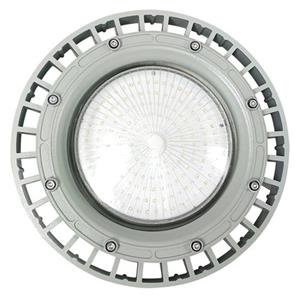
In H2 2026, the explosion proof light industry will further popularize new LED light technologies such as high-color-rendering LED chips, intelligent constant current drive, and integrated heat dissipation structures. The new generation of LED explosion proof light products can adapt to extreme working environments such as high temperature, low temperature, high humidity, and strong corrosion, with an explosion-proof grade reaching Ex d IIC T6 Ga, meeting the highest safety standards of global hazardous zones. In addition, the miniaturization and lightweight design of LED explosion proof light further improves the installation convenience of light fixtures, suitable for complex and narrow industrial operation spaces, greatly expanding the application scenarios of explosion proof light.
2.3 Downstream Hazardous Industry Expansion Drives Rigid Light Demand
The sustained expansion of downstream application industries provides a broad market space for explosion proof light. In H2 2026, the global oil and gas industry will continue to advance offshore exploration and onshore field upgrading projects, and all drilling platforms, oil depots, and natural gas transmission stations need to be equipped with professional explosion proof light to ensure operation safety. The chemical industry, as the largest application market of explosion proof light, will witness continuous growth in new chemical park construction and old factory renovation in H2 2026, generating a large number of new and replacement demands for LED explosion proof light.
The mining industry is another key demand scenario for explosion proof light. With the accelerated intelligent transformation of global coal and non-ferrous metal mines, traditional underground light equipment is being comprehensively upgraded to intelligent LED explosion proof light. At the same time, the pharmaceutical, food processing, and new energy battery industries, which have high requirements for dust explosion prevention, are also expanding rapidly, further driving the market demand for dust-proof and explosion-proof integrated LED light products. The diversified expansion of downstream industries ensures that the explosion proof light market maintains stable growth momentum in H2 2026.
3. H2 2026 Explosion Proof Light Industry Technological Trends and Product Upgrading Direction
3.1 Intelligent Integration Becomes the Core Development Trend of Explosion Proof Light
Intelligentization is the most prominent development trend of the explosion proof light industry in the second half of 2026. With the deep integration of IoT technology and industrial light equipment, intelligent LED explosion proof light has gradually become the mainstream product in the market. Different from traditional single-function explosion proof light, intelligent LED explosion proof light is equipped with wireless communication modules, sensors, and intelligent control systems, realizing remote switch control, automatic brightness adjustment according to ambient light, real-time monitoring of light fixture operating status, and automatic fault alarm functions.
In H2 2026, more explosion proof light manufacturers will launch cloud-connected intelligent light products, which can access the industrial intelligent management platform to realize unified management of all explosion proof light equipment in the factory, effectively reducing manual inspection costs and improving industrial operation safety. This intelligent LED explosion proof light is widely applicable in large chemical parks, offshore wind power platforms, and intelligent mines, and will occupy more than 40% of the new explosion proof light market share in H2 2026, becoming the key competitive field for major enterprises in the light industry.
3.2 Energy Saving and Low Carbon Upgrade Accelerates LED Explosion Proof Light Penetration
Under the global dual-carbon goal, energy saving and low carbon have become important evaluation indicators for industrial light equipment selection, further promoting the comprehensive replacement of traditional explosion proof light by LED explosion proof light. In H2 2026, governments of various countries will continue to introduce energy-saving subsidy policies for industrial equipment renovation, encouraging enterprises to eliminate high-energy-consumption light products and promote high-efficiency LED explosion proof light. The ultra-low power consumption and high energy-saving characteristics of LED light make it the only optimal solution for industrial low-carbon lighting renovation in hazardous scenarios.
In addition, solar-storage integrated LED explosion proof light products have achieved technological breakthroughs and small-scale promotion in H2 2026. This new type of explosion proof light combines solar power generation, battery energy storage, and LED light source, which can realize self-sufficient power supply, completely get rid of the limitation of wired power supply, and is especially suitable for remote oil fields, mountain mines, and offshore unattended platforms. The promotion of green and low-carbon explosion proof light products will further expand the market boundary of the explosion proof light industry and drive the sustainable development of the light manufacturing industry.
3.3 High Adaptability and Customized Light Products Meet Segmented Scenario Demands
With the continuous refinement of industrial application scenarios, the market demand for customized explosion proof light is increasing day by day in H2 2026. Different hazardous scenarios have different requirements for the explosion-proof grade, protection level, light distribution angle, and installation mode of explosion proof light. For example, offshore marine environments require explosion proof light with high anti-corrosion and salt-spray resistance; underground mines require explosion proof light with impact resistance and low-light uniform illumination; and pharmaceutical workshops require explosion proof light with dust-proof and sterile characteristics.
Major light manufacturers are actively deploying segmented customized product lines in H2 2026, launching targeted LED explosion proof light products for different industries and scenarios. Through optimized LED light distribution design, customized shell materials, and personalized functional configuration, these products accurately meet the differentiated safety lighting needs of various high-risk industries. The customized development of explosion proof light will become an important profit growth point for enterprises in the light industry, promoting the industry to shift from homogeneous price competition to differentiated technology competition.
4. Competitive Landscape and Enterprise Development Strategy of Explosion Proof Light Industry in H2 2026
The global explosion proof light industry presents a competitive pattern where international leading brands and local regional brands coexist. International giants such as Eaton, Dialight, Hubbell, and Glamox have long occupied the high-end market of explosion proof light with advanced LED light technology, perfect certification system, and brand advantages, and their products are mainly used in high-precision and high-standard industrial scenarios in Europe and America. In the second half of 2026, these international enterprises will continue to increase R&D investment in intelligent LED explosion proof light, focus on improving product intelligence and networking level, and consolidate their leading position in the high-end light market.
At the same time, emerging Asian explosion proof light manufacturers are rising rapidly, relying on cost advantages, flexible customized services, and rapid response capabilities to gradually seize the middle and low-end market, and continuously break through the high-end market through technological upgrading. In H2 2026, local brands in China, Southeast Asia and other regions will further optimize the production process of LED explosion proof light, improve product certification qualifications such as ATEX, IECEx, and UL, and narrow the technical gap with international brands. With the improvement of product quality and brand awareness, local explosion proof light enterprises will achieve rapid growth in market share in emerging economies.
In terms of industry competition strategy, enterprises in the explosion proof light industry will shift from single product sales to overall solution output in H2 2026. Leading light manufacturers begin to provide customers with one-stop services including explosion proof light selection, scheme design, installation guidance, and after-sales maintenance, improving customer stickiness and comprehensive profit margin. In addition, enterprises will strengthen supply chain integration, stabilize the supply of LED chips, drive power supplies and other core components, reduce production costs, and further improve the market competitiveness of explosion proof light products.
5. Industry Challenges and Risk Warnings for H2 2026 Explosion Proof Light Market
While the explosion proof light industry ushers in development opportunities, it also faces certain industry challenges and market risks in H2 2026. First, the industry has high technical threshold and certification barriers. Formal explosion proof light products need to pass multiple international safety certifications, with long certification cycle and high cost, which restricts the entry of new enterprises and affects the overall market activity of the light industry. Second, the raw material price fluctuation of LED chips, aluminum alloy shells, and electronic components will affect the production cost and profit level of explosion proof light manufacturers, bringing certain pressure on enterprise operation.
Third, the market has homogeneous competition problems. A small number of small and medium-sized light enterprises ignore product quality, produce low-cost and unqualified imitation explosion proof light products, disrupt the market price system, and affect the overall brand image and healthy development of the explosion proof light industry. In addition, the global industrial supply chain instability and regional trade policy changes may have a certain impact on the export business of explosion proof light enterprises in H2 2026.
To cope with the above challenges, industry enterprises need to increase technological R&D investment, improve product quality and certification qualifications, and avoid homogeneous competition through differentiated product innovation. At the same time, enterprises should optimize the supply chain system, establish long-term cooperative relationships with core component suppliers, and resist raw material price fluctuation risks. Industry associations also need to strengthen market supervision, standardize the production and sales standards of explosion proof light, and eliminate unqualified light products, so as to promote the standardized and healthy development of the explosion proof light industry.
6. Full Summary and Long-term Outlook of Explosion Proof Light Industry
To sum up, the second half of 2026 is a critical period for the accelerated upgrading and scale expansion of the global explosion proof light industry. Driven by policy supervision, technological innovation, and downstream demand, the explosion proof light market will maintain steady and rapid growth, and LED explosion proof light will further replace traditional light products and become the absolute mainstream of the industrial safety light market. The intelligent, green, customized, and high-efficiency development of LED light technology will continue to lead the technological iteration and structural upgrading of the explosion proof light industry.
In the long run, from 2026 to 2033, the global explosion proof light market will maintain a compound annual growth rate of more than 8.5%, and the market size is expected to exceed USD 950 million by 2033. With the continuous advancement of global industrial modernization and the continuous improvement of industrial safety standards, the market demand for professional, high-performance, and intelligent explosion proof light will continue to grow. LED light technology will continue to innovate and break through, further optimizing the performance of explosion proof light, reducing product costs, and expanding application scenarios.
In the future, the explosion proof light industry will develop towards higher safety standards, higher intelligence level, lower energy consumption, and more refined segmentation. Enterprises that master core LED light technology, have complete certification qualifications, and can provide customized overall solutions will occupy the dominant position in the global explosion proof light market. As an important part of industrial safety equipment, explosion proof light will continue to play an irreplaceable role in ensuring the safe production of global hazardous industries, promoting the high-quality development of the entire industrial light manufacturing industry.